Owen makes us feel the horror of war, and Sassoon often makes us angry at its hypocrisy; Fairbrother makes us question the political, ideological, and social machinery that allows war to continue. His battlefield is therefore not only the trench but also the media, parliament, marketplace, internet, and human mind.
Through his poems, Fairbrother upholds political polarisation, misinformation, nationalism, climate anxiety, the arms trade, displacement, and the endless cycle of revenge. His major theme is the human cost of conflict and the urgent need to choose peace over hatred and dehumanization.
“We believe we’re helping, but is that always true?”
Here the poet challenges the official explanation and exposes the truth.
“No home, state, or place to belong
These wanderers are the first forgotten”
Fairbrother brings in displacement and migration as consequences of war. The poet’s intention is clear: to expose war’s absurdity and destructiveness while challenging readers to question the systems and beliefs that keep it alive. Poems such as “Wanderers of War,” “The Widow,” “The Equation,” “The Red Button,” and “Ceasefire Now…or never?” bring out the personal and political consequences of violence.
Fairbrother’s language is direct and conversational, embedded with rhyme and rhythmic wordplay. “Siege Sonics” is particularly striking for its rapid-fire use of alliteration and sound: weapons “bang,” “clang,” “zoom,” and “boom,” creating an almost cinematic experience of warfare.
“Rifles bang, a soldier’s slang, cannons clang
Rockets zoom, missiles boom, people enter the tomb”
The poet also uses humor and satire effectively, especially when dealing with otherwise grim subjects. “The Arms Trade” imagines the arms industry as a ridiculous sales business offering discounts on weapons. At the same time, “Playground Politics” humorously reduces geopolitical conflict to children quarreling in a school playground.
This humor is not merely comic relief. It exposes the absurdity of political posturing, thus sharpening the criticism. The poet’s use of familiar popular references and playful titles such as “Top Gun”, “Double-Down!”, and “The Lieutenant’s Last Limerick” further gives the collection a contemporary voice. He wants his poems to communicate, question, provoke, and start conversations rather than remain obscure.
In this moment, as war ravages the world, “Warheads” feels timely. Fairbrother asks uncomfortable questions about who benefits from war, why societies keep repeating historical mistakes, and whether humanity can choose cooperation over destruction.
I would recommend “Warheads” to readers interested in contemporary war poetry, political poetry, peace literature, social satire, and poetry that responds directly to the crises of our time. “Warheads” ultimately leaves us with a simple but urgent question: after the fighting ends, what will still be standing?
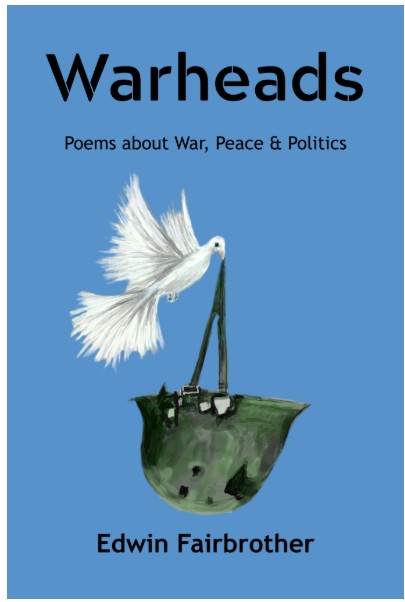


Thanks Sam for this glowing, brilliantly written, review!
Here’s to world peace x